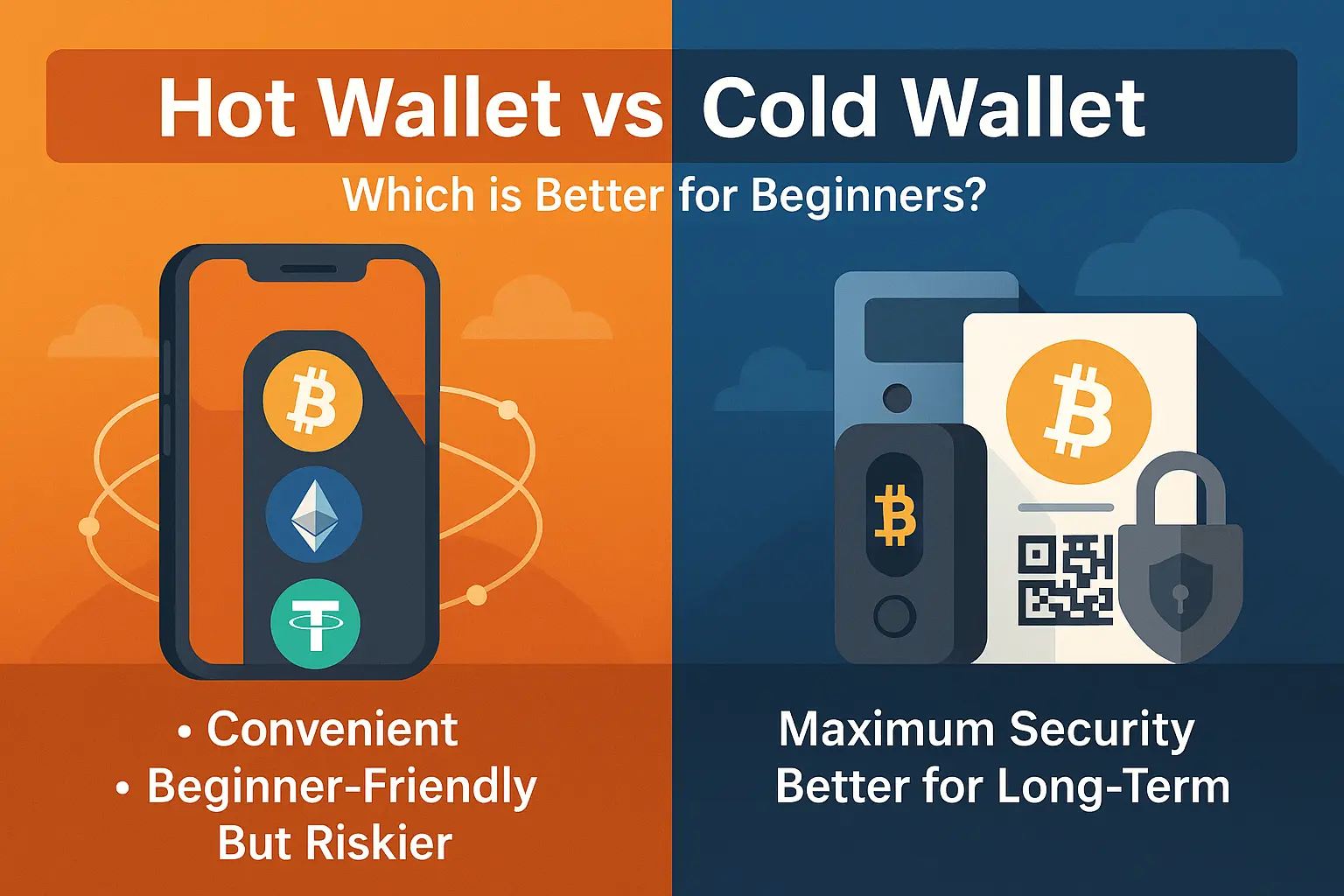
One of the most important decisions for anyone starting in cryptocurrency is how to store your coins safely. This brings us to the two main types of crypto storage: hot wallets and cold wallets. Both serve the same purpose—holding your digital assets—but they differ in security, accessibility, and convenience.
If you’re a beginner in 2025, you may be asking: Which one is better for me? Let’s break it down.
What is a Hot Wallet?
A hot wallet is a cryptocurrency wallet connected to the internet. Examples include:
- Mobile apps (e.g., Trust Wallet, MetaMask)
- Web wallets (exchange accounts like Binance or Coinbase)
- Desktop wallets
✅ Pros of Hot Wallets:
- Convenience: Easy access for sending, receiving, and trading crypto.
- Free or low cost: Many hot wallets are free apps.
- Beginner-friendly: Simple setup, no hardware required.
⚠️ Cons of Hot Wallets:
- Security Risks: Being online makes them more vulnerable to hacking, phishing, and malware.
- Custodial Risks: If funds are kept on exchanges, you rely on the platform’s security.
What is a Cold Wallet?
A cold wallet is a wallet stored offline, without internet access. Examples include:
- Hardware wallets (Ledger, Trezor)
- Paper wallets (printed private keys/QR codes stored securely)
✅ Pros of Cold Wallets:
- Maximum Security: No internet access = much harder to hack.
- Best for Long-Term Storage: Perfect for holding large amounts of crypto safely.
⚠️ Cons of Cold Wallets:
- Less Convenient: Requires plugging in a device or scanning codes.
- Cost: Hardware wallets cost between $50–$200.
- Learning Curve: Beginners may find setup and key management intimidating.
Hot Wallet vs. Cold Wallet: Beginner Comparison
| Feature | Hot Wallet | Cold Wallet |
|---|---|---|
| Security | Moderate (online risks) | Very High (offline storage) |
| Ease of Use | Very easy | Moderate to hard |
| Cost | Free or low | $50–$200 |
| Best For | Daily transactions, small amounts | Long-term storage, large amounts |
Which is Better for Beginners?
For beginners, the best choice often depends on goals and investment size:
- ✅ Hot Wallet: Best for beginners who are just starting out, making small trades, and need easy access.
- ✅ Cold Wallet: Recommended once you start holding larger amounts of crypto or plan to store long term.
Pro tip: Many beginners use both:
- Keep a small amount in a hot wallet for trading and daily use.
- Store the bulk of funds in a cold wallet for maximum security.
Final Thoughts
Hot wallets and cold wallets each have strengths. Hot wallets are convenient and beginner-friendly, but come with security risks. Cold wallets provide top-level security, but require more effort and investment.
For beginners, start with a trusted hot wallet, then transition into a cold wallet for serious holdings. This hybrid strategy balances convenience with safety, ensuring you enjoy crypto without unnecessary risk.