The rise of Bitcoin, Ethereum, and thousands of other digital assets has inspired entrepreneurs, developers, and even companies to create their own cryptocurrency. While it may sound complicated, creating a cryptocurrency has become more accessible thanks to open-source blockchain frameworks and customizable tools.
Whether your goal is to launch a new blockchain project, build a token for your business, or experiment with Web3 applications, this guide explains the basics of how to create a cryptocurrency.
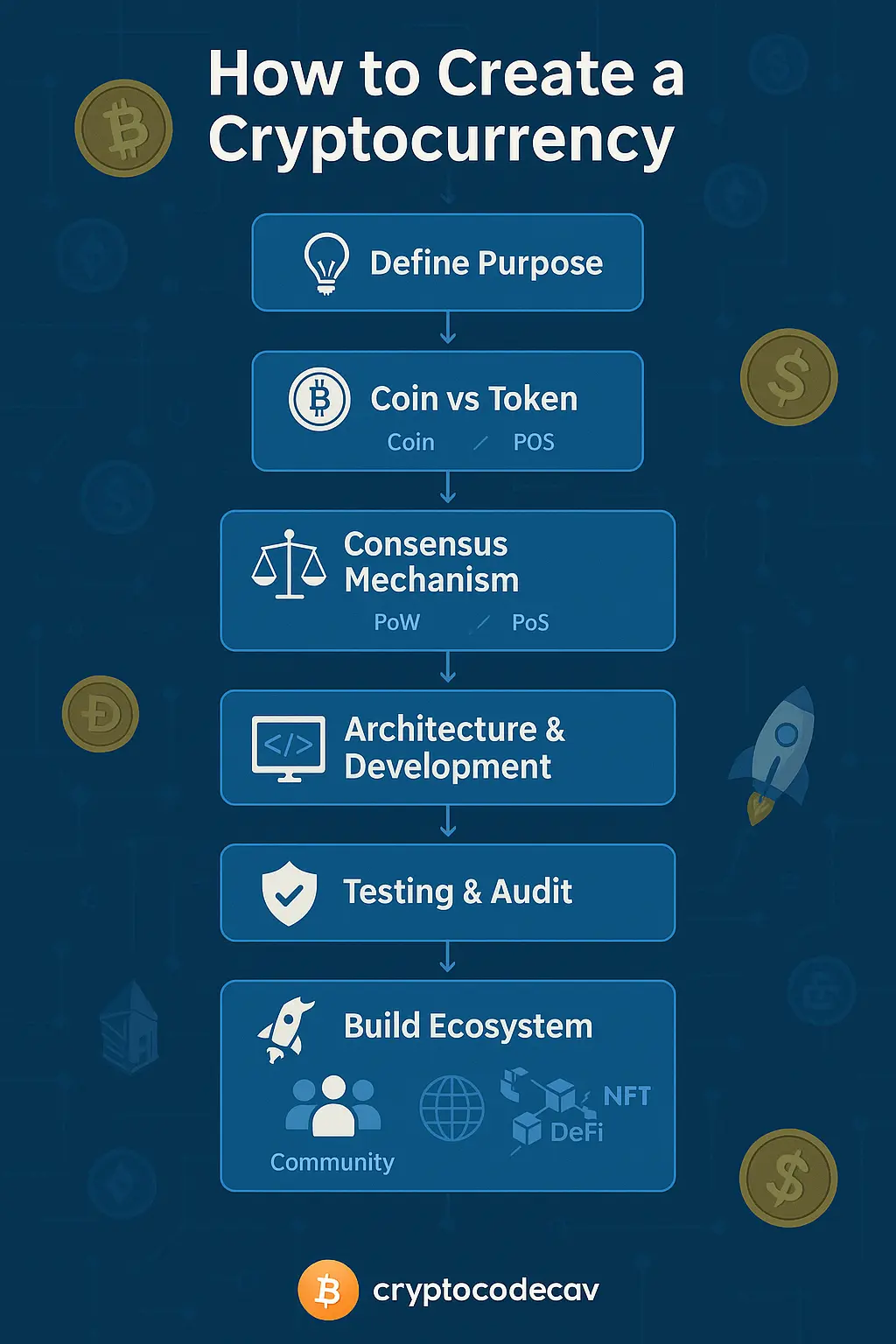
Step 1: Define Your Purpose
Before jumping into the technical steps, ask yourself: Why are you creating a cryptocurrency?
- Utility Token: A token to be used within your platform (e.g., loyalty points, payment system).
- Governance Token: Allows users to vote on decisions in a decentralized project.
- Security Token: Backed by real-world assets like stocks, bonds, or real estate.
- Stablecoin: Pegged to fiat currencies (e.g., USD) to minimize volatility.
Having a clear vision helps you decide whether to create a coin (native blockchain) or a token (built on an existing blockchain).
Step 2: Choose Between a Coin or a Token
- Coin: Requires building a new blockchain from scratch (like Bitcoin or Ethereum).
- Pros: Full control over network, rules, and security.
- Cons: Expensive, time-consuming, and requires a skilled development team.
- Token: Built on an existing blockchain such as Ethereum (ERC-20), Binance Smart Chain (BEP-20), or Solana.
- Pros: Easier, faster, and more cost-effective.
- Cons: Limited by the rules of the host blockchain.
For beginners, creating a token is the most practical path.
Step 3: Select a Consensus Mechanism
If you’re building a blockchain-based coin, decide how transactions will be validated:
- Proof of Work (PoW): Used by Bitcoin, requires mining power.
- Proof of Stake (PoS): Used by Ethereum, requires validators to stake coins.
- Delegated Proof of Stake (DPoS): Faster and energy-efficient, popular for scalable projects.
Step 4: Design the Architecture
Key design decisions include:
- Supply Limit: Fixed (like Bitcoin’s 21 million) or inflationary.
- Transaction Speed & Fees: Balance between scalability and decentralization.
- Security Features: How to prevent fraud, double-spending, or 51% attacks.
Step 5: Development
Depending on your choice (coin vs token):
- Coin Development:
- Write blockchain code in languages like C++, Go, or Rust.
- Customize parameters (block size, block time, consensus).
- Run nodes to maintain the network.
- Token Development:
- Deploy a smart contract on Ethereum, BSC, or Solana.
- Use established standards like ERC-20 or BEP-20.
- Example: An ERC-20 token contract in Solidity defines supply, transfers, and ownership.
Step 6: Testing
- Test your coin/token on a testnet to identify bugs or security vulnerabilities.
- Perform audits for smart contracts to prevent exploits.
- Ensure scalability and reliability before mainnet launch.
Step 7: Launch and Distribution
- Launch your cryptocurrency on a mainnet or blockchain network.
- Distribute tokens via:
- Airdrops: Free distribution to early users.
- Initial Coin Offering (ICO) / Token Sale: Raise funds by selling tokens.
- Exchange Listing: Get your cryptocurrency listed on platforms for trading.
Step 8: Build an Ecosystem
Creating a cryptocurrency isn’t just technical—it’s about adoption.
- Develop use cases (payments, DeFi, NFTs, loyalty rewards).
- Build a community through marketing, Telegram, Discord, and Twitter (X).
- Ensure ongoing updates, governance, and security patches.
Risks and Considerations
- Regulatory Compliance: Many countries regulate cryptocurrencies; ensure you comply with KYC/AML laws.
- Security Threats: Poorly coded smart contracts are vulnerable to hacks.
- Market Adoption: Without utility or demand, your cryptocurrency may lose relevance.
Final Thoughts
Creating a cryptocurrency in 2025 is easier than ever, but success requires more than just code. You need a clear purpose, strong security, legal compliance, and an active community.
- For businesses: a token can enhance loyalty programs or enable cross-border payments.
- For innovators: a new blockchain can introduce faster, more secure systems.
Ultimately, your cryptocurrency’s value depends not just on technology, but on trust, adoption, and utility in the real world.