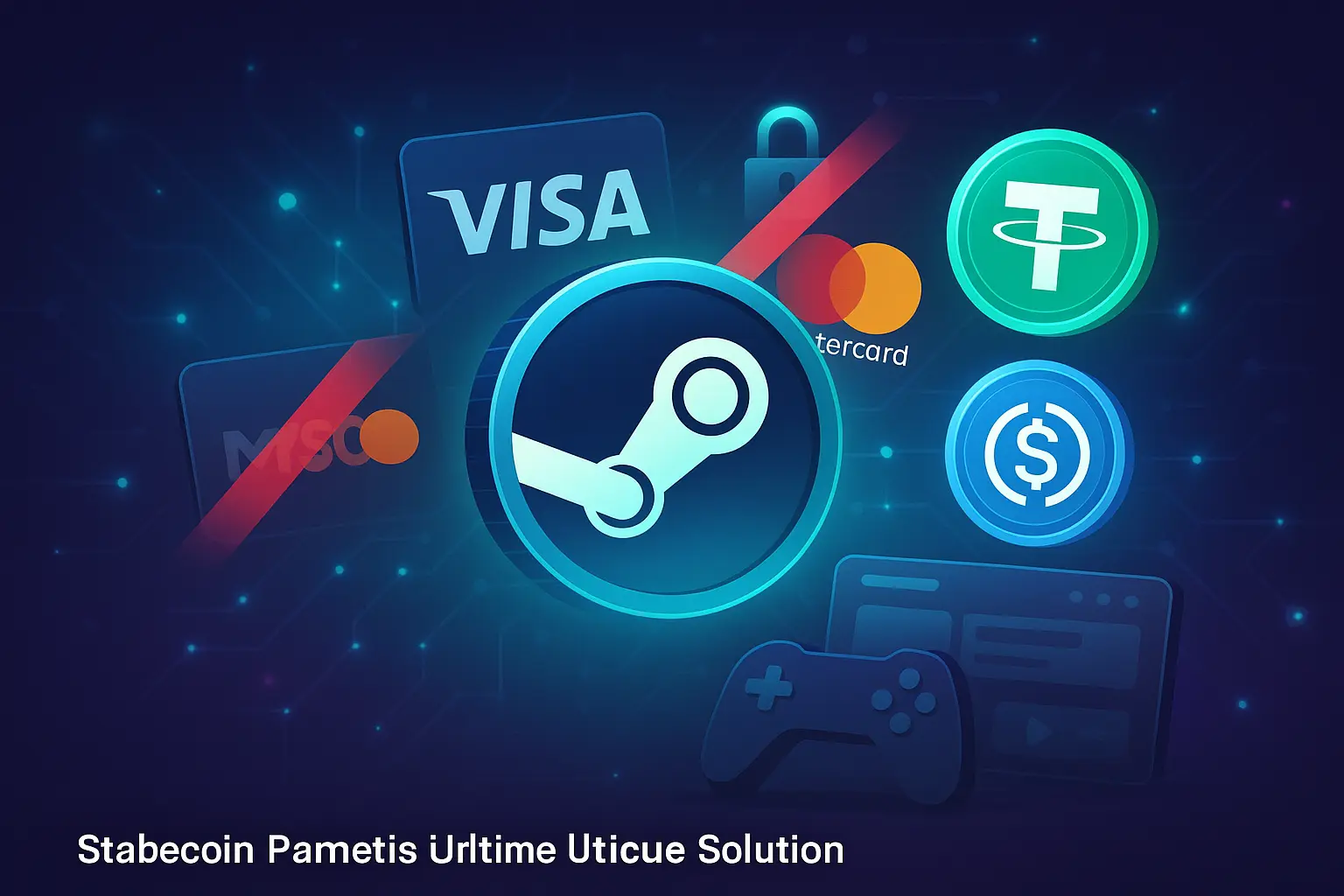
The global gaming industry continues to grow at an incredible pace, yet payment regulations remain one of its toughest challenges. Platforms like Steam, the world’s largest digital game distribution service, face increasing hurdles with traditional payment providers such as Visa and Mastercard. As regulators tighten oversight on online payments and cross-border transactions, a new question arises: Could stablecoin payments become the ultimate solution for the gaming industry?
Steam and the Payment Regulation Challenge
Steam processes millions of transactions daily, ranging from game purchases to in-game microtransactions. However, the platform faces two major issues with traditional payment channels:
- Regulatory Compliance Visa and Mastercard are bound by strict anti-money laundering (AML), sanctions, and consumer protection rules. This has led to service interruptions or higher fees in certain regions where regulations are unclear or gaming transactions are considered “high risk.”
- Regional Restrictions In countries with strict currency controls or unstable banking systems, players often find it difficult—or even impossible—to make purchases through Visa or Mastercard. This creates a barrier to access for legitimate gamers worldwide.
Steam has attempted to solve these issues by diversifying its payment options—adding local payment gateways, PayPal, and even limited cryptocurrency integrations in the past. Still, the reliance on traditional financial rails continues to expose the platform to disruptions.
The Case for Stablecoin Payments
Enter stablecoins, digital assets pegged to fiat currencies like the US dollar (USDT, USDC) or euro. Unlike volatile cryptocurrencies such as Bitcoin, stablecoins combine the speed and transparency of blockchain with the stability of traditional money. For the gaming industry, this could be a game-changer.
Benefits of Stablecoin Payments for Gaming Platforms
- Global Accessibility: Players from regions with limited banking access can still participate without needing Visa or Mastercard.
- Lower Fees: On-chain transactions typically cost less than traditional card processing.
- Instant Settlements: No waiting days for funds to clear—both gamers and platforms benefit from near-instant payments.
- Transparency and Compliance: Blockchain-based payments can be tracked and audited, helping platforms like Steam maintain compliance with international financial laws.
- Reduced Chargeback Risk: Fraud and chargebacks are major issues for card payments. Stablecoin payments, once confirmed, are irreversible, reducing risk for platforms.
Could Stablecoins Be the Ultimate Solution?
While stablecoins offer immense potential, adoption will depend on regulatory clarity. Some governments remain cautious, fearing capital flight or misuse of digital assets. However, with countries like the U.S., EU, and parts of Asia working on legal frameworks for stablecoins, mainstream adoption in gaming could arrive sooner than expected.
For Steam and similar platforms, stablecoin payments could solve long-standing challenges with Visa and Mastercard restrictions while also opening access to millions of unbanked gamers worldwide.
Final Thoughts
Steam’s struggles with payment regulation highlight a larger problem across the gaming industry: reliance on a few centralized financial providers. By embracing stablecoin payments, platforms could achieve faster, cheaper, and more inclusive transactions.
The question is no longer if stablecoins will play a role in gaming, but when. And for an industry built on global digital communities, the shift toward stablecoin payments might just be the ultimate solution to regulatory and payment barriers.