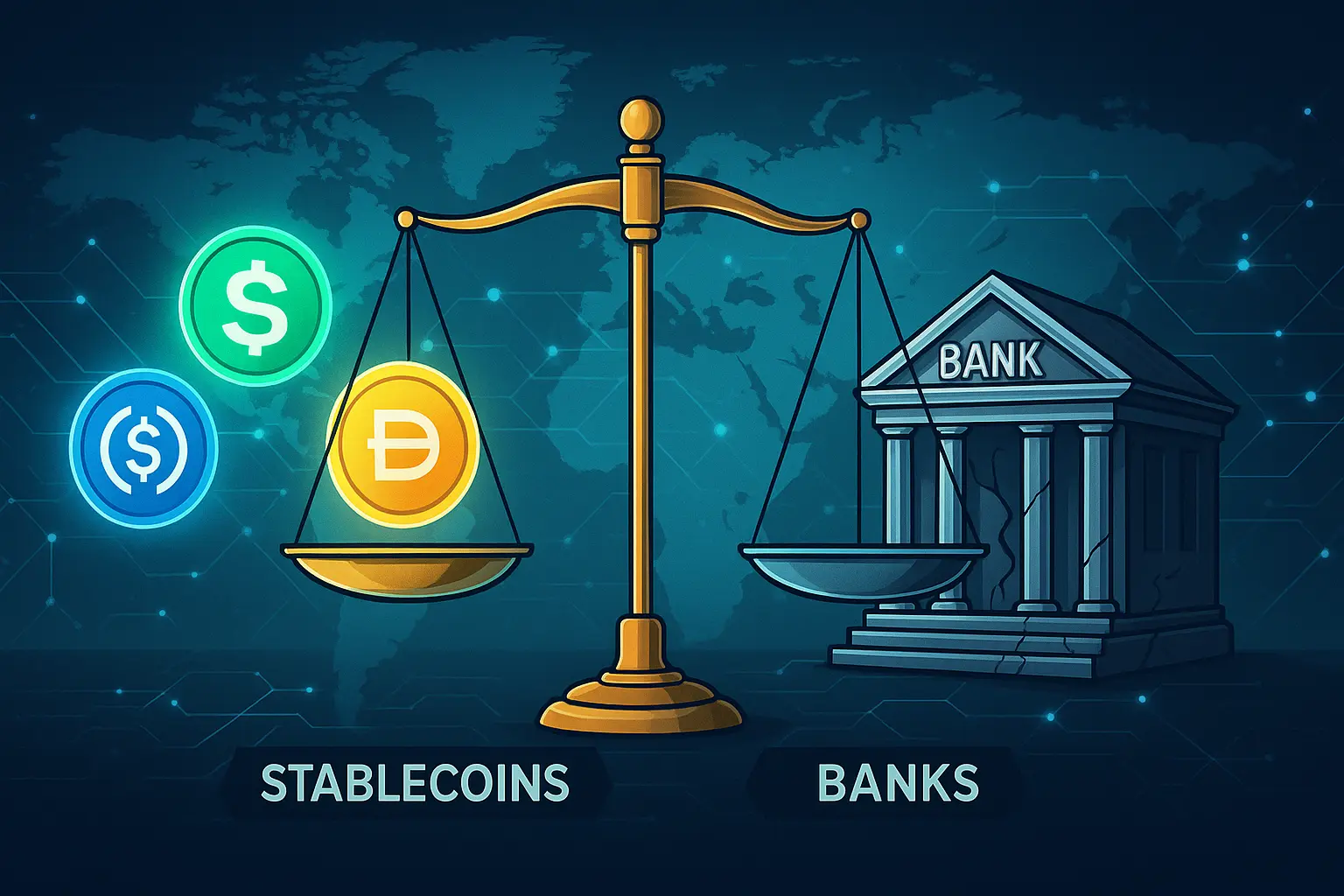
In recent years, stablecoins have emerged as one of the most debated innovations in global finance. Pegged to fiat currencies like the U.S. dollar or euro, stablecoins aim to provide the speed and transparency of blockchain while maintaining price stability. As more governments move toward embracing stablecoins, questions arise: Will this adoption strengthen economies, or will it disrupt and potentially weaken the traditional banking system?
Why Governments Are Embracing Stablecoins
Governments see value in stablecoins for several reasons:
- Faster Payments and Settlements Stablecoins can enable near-instant domestic and cross-border payments, reducing reliance on slow banking systems and costly intermediaries.
- Financial Inclusion For populations without access to banking, stablecoins offer a digital-first solution to participate in the economy using only a smartphone.
- Blockchain Transparency Stablecoin transactions are recorded on public ledgers, supporting anti-money laundering (AML) monitoring and tax compliance.
- Boosting Digital Economies As e-commerce, gaming, and digital services expand, stablecoins can serve as a universal payment layer bridging fiat and crypto.
Potential Economic Benefits
- Lower Transaction Costs: Businesses and consumers benefit from reduced fees compared to credit cards or remittance services.
- New Investment Opportunities: Stablecoins can integrate with decentralized finance (DeFi), providing yield-generation options for individuals and institutions.
- Increased Global Trade: By removing friction in cross-border transactions, stablecoins could stimulate international business growth.
- Resilience in Volatile Economies: In countries facing hyperinflation, dollar-pegged stablecoins can act as a store of value and preserve citizens’ wealth.
Risks for the Traditional Banking System
While stablecoins bring efficiency, they also pose significant risks to banks:
- Disintermediation If individuals and businesses hold stablecoins instead of deposits, banks may lose a critical source of funding, reducing their ability to issue loans.
- Weakened Monetary Policy Central banks may struggle to control money supply and interest rates if large amounts of economic activity shift to stablecoin ecosystems.
- Financial Stability Risks In times of crisis, people could move rapidly from bank deposits to stablecoins, triggering bank runs.
- Competition with CBDCs Central Bank Digital Currencies (CBDCs) may compete with private stablecoins, forcing regulators to decide how both can coexist.
A Balanced Future?
The impact of stablecoin adoption will depend on how governments regulate and integrate them into the financial system:
- Supportive Regulation: Clear frameworks can allow stablecoins to work alongside banks, improving efficiency without destabilizing the system.
- Bank Integration: Traditional banks may adopt stablecoins themselves, offering blockchain-based deposits and payment rails.
- Public-Private Partnerships: Governments may encourage regulated stablecoins while developing their own CBDCs.
Final Thoughts
Government embrace of stablecoins is not a question of if, but when. The challenge is finding the balance between innovation and stability. Done right, stablecoins could boost economies by improving financial access, trade, and efficiency. But without thoughtful regulation, they risk undermining the traditional banking system that still underpins global finance.
The future likely lies in coexistence—where stablecoins, CBDCs, and banks evolve together to serve an increasingly digital world economy.